


Despite the release of its successor, Microsoft Flight Simulator 2020 continues to dominate the virtual aviation world in 2025. The MSFS 2020 vs MSFS 2024 debate has sparked intense discussions across flight simulation communities, yet the older version maintains its strong foothold. While newer simulators often quickly replace their predecessors, Flight Simulator 2020 has defied this trend. The flight simulator's popularity remains remarkably steady, with many experienced pilots and newcomers alike choosing to stick with the trusted 2020 version. Recent surveys and community feedback suggest that this preference isn't just about resistance to change. Community preferences indicate specific reasons behind this loyalty, from established add-on ecosystems to proven performance across various hardware setups. The question isn't simply about which version is newer or more advanced. Instead, it's about understanding why a significant portion of the flight simulation community continues to choose Microsoft Flight Simulator 2020 as their primary platform. Let's explore the factors driving this unexpected trend and what it means for the future of flight simulation.
⚠️ The following interpretation is based in part on the findings from the FlightSim Community Survey 2024 by Navigraph, but also includes inferred insights and the personal opinions of the author. While themes such as simulator adoption trends, hardware considerations, and usage patterns are supported by the survey data, specific correlations are not directly presented in the original report. These points should be viewed as interpretations of the author or informed assumptions rather than definitive conclusions based on empirical data.
The 2024 Navigraph Survey Results
The annual Navigraph Flight Simulation Survey offers crucial insights into simulator usage patterns across the flight sim community. Four years after its initial release, Microsoft Flight Simulator 2020 continues to maintain a significant user base. The survey data shows that many experienced simmers have chosen to remain with the 2020 platform rather than transitioning to the newer version.
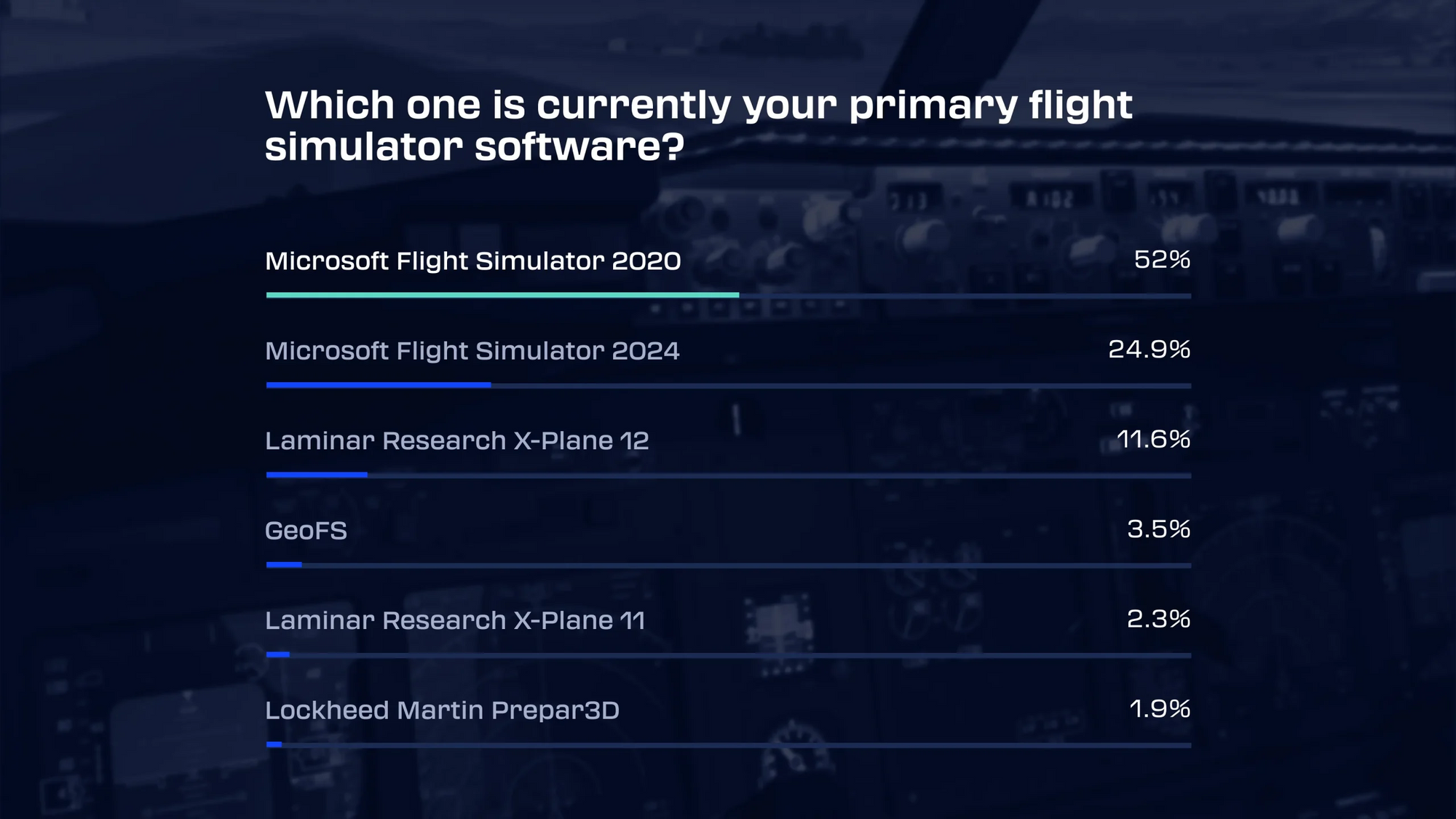
Several factors may contribute to this loyalty. First, the established add-on ecosystem for Flight Simulator 2020 provides a rich library of aircraft, scenery, and utilities that users have already invested in. Additionally, many users report satisfaction with the stability and performance optimizations that have evolved through numerous updates to the 2020 platform. The survey also indicates that hardware considerations play a major role in simulator selection.
Comparison with Previous Surveys
Examining the trends across multiple years of Navigraph data shows an interesting pattern in flight simulator adoption rates. Previous surveys indicated that new simulator versions typically see rapid adoption, followed by a gradual decline of the predecessor. However, Flight Simulator 2020 breaks this pattern. Unlike the transition from FSX to MSFS 2020, where users migrated quickly to the newer platform, the move to Flight Simulator 2024 has been notably more measured.
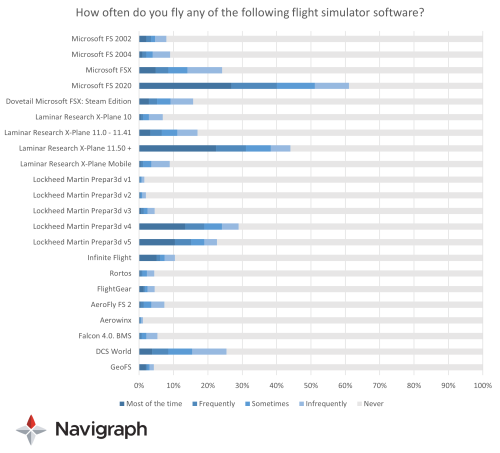
Furthermore, the 2024 survey highlights a more cautious approach to new simulator adoption compared to previous years. Whereas earlier surveys showed enthusiasm for cutting-edge features regardless of potential issues, today's flight sim community appears to value stability and ecosystem compatibility over novelty. While not explicitly confirmed by survey data, some users and community discussions suggest that there may be demographic trends influencing MSFS 2024 adoption. For example, newer pilots — those with less investment in third-party add-ons or custom setups — are believed by some to be more open to transitioning to the 2024 version. In contrast, more experienced simmers with heavily customized environments may be more inclined to remain loyal to Flight Simulator 2020.
It is also speculated that age may play a role in adoption rates, with younger users potentially showing higher adoption due to better access to newer hardware or fewer established workflows. While the Navigraph survey includes detailed data on simulator usage habits, aircraft preferences, and flight activity types, it does not directly link these factors to adoption behavior. Nevertheless, the Navigraph FlightSim Community Survey remains the most comprehensive source of insights into the flight simulation community to date. Any conclusions about demographic influences on MSFS 2024 adoption should be considered interpretive rather than definitive.
Technical Comparison
Looking beyond user preferences, the underlying technical differences between the two flight simulators help explain the ongoing MSFS 2020 vs MSFS 2024 debate. MSFS 2024 demands significantly more from computer hardware than its predecessor. Performance optimization remains a crucial factor in Microsoft Flight Simulator comparison discussions. After four years of updates and patches, Flight Simulator 2020 offers a more stable experience across various hardware configurations. Consequently, many users with mid-range systems find the consistent performance of the 2020 version preferable to the potentially higher but less stable framerates of Flight Simulator 2024.

Graphics and Realism Improvements
MSFS 2024 introduces several visual enhancements over its predecessor. Nevertheless, the graphics leap isn't as dramatic as the transition from FSX to MSFS 2020. Furthermore, numerous third-party visual enhancement mods for the 2020 version have narrowed the visual gap considerably.mWeather simulation has received upgrades in MSFS 2024, specifically in turbulence modeling and localized weather effects. Still, many experienced users report that these improvements, while noticeable, aren't substantial enough to justify abandoning their established MSFS 2020 setups.

Barriers to MSFS 2024 Adoption
Several significant obstacles stand in the way of widespread MSFS 2024 adoption, explaining why many enthusiasts remain loyal to the 2020 version. Understanding these barriers provides insight into the flight sim community preferences that continue to favor the established platform.
Pricing and Upgrade Considerations
First and foremost, the financial aspect presents a substantial hurdle for many flight simulation enthusiasts. Flight Simulator 2024 requires a new purchase at full price. This cost comes on top of significant investments many users have already made in the MSFS 2020 ecosystem. For hobbyists who have spent hundreds — sometimes thousands — of dollars on aircraft add-ons, scenery packages, and hardware peripherals optimized for MSFS 2020, the additional expense of upgrading represents a considerable financial commitment. This economic factor alone explains much of the Microsoft Flight Simulator comparison data showing resistance to migration. Indeed, many users report taking a "wait and see" approach, preferring to let early adopters identify and report issues before committing their resources. This cautious strategy reflects a mature understanding of product development cycles in the simulation industry.
Hardware Requirements and Compatibility
As highlighted in the technical comparison, MSFS 2024's increased system requirements create another substantial barrier. The simulator demands more powerful hardware across all specifications — CPU, RAM, graphics capabilities, and storage space. Accordingly, many users with mid-range systems that run MSFS 2020 smoothly find themselves facing potential hardware upgrades to achieve comparable performance with Flight Simulator 2024. Given ongoing challenges in the hardware market and the significant investment required, many users opt to continue with their current setup. Compatibility with existing control setups also influences the MSFS 2024 adoption rate. Users with elaborate flight control systems, multiple monitors, or VR setups typically report concerns about whether their current hardware will function optimally with the new release.

Perhaps the most compelling reason for MSFS 2020's continued popularity lies in its mature add-on ecosystem. The flight simulator's longevity has allowed developers to create an extensive library of high-quality content, including highly detailed aircraft with sophisticated systems modeling, photorealistic scenery packages for specific regions and airports and utility programs that enhance the simulation experience. Essentially, Microsoft Flight Simulator 2020 benefits from four years of continuous development by both Microsoft and third-party creators. In contrast, Flight Simulator 2024 must rebuild this ecosystem from the ground up, with many popular add-ons requiring significant updates or complete redesigns to function with the new platform. For serious flight sim enthusiasts who have curated personalized flying experiences with specific aircraft and routes, this represents a substantial disincentive to upgrade until their preferred add-ons become available for MSFS 2024.
Community Feedback and Reception
Forums like Avsim and the official Microsoft Flight Simulator community hub reveal mixed sentiments about Flight Simulator 2024. Generally, passionate discussions highlight a division between technology enthusiasts eager for cutting-edge features and practical users concerned about compatibility issues. Subsequently, many threads feature users reporting they're "waiting until the dust settles" before considering an upgrade. Reddit communities dedicated to flight simulation show similar patterns, with numerous posts from users explaining their decision to stick with MSFS 2020. The flight sim community preferences often center around protecting existing investments in add-ons and avoiding early adoption challenges.
Industry publications offer more measured assessments of both simulators. Overall, they acknowledge MSFS 2024's technical advancements while recognizing the practical advantages of MSFS 2020's mature ecosystem. Flight simulation specialists often point out that professional users typically prioritize reliability and consistent performance over new but potentially unstable features. Interestingly, several prominent content creators who initially praised MSFS 2024 have returned to using MSFS 2020 for their regular productions, citing compatibility issues with recording software and streaming setups.
Common Complaints and Praises
MSFS 2020 consistently earns praise for its stability, optimization improvements, and vast third-party support. Users frequently mention the "complete package" feeling of a mature simulator with four years of updates and community contributions. In fact, common criticisms of Flight Simulator 2024 include inconsistent performance across different hardware configurations, compatibility issues with popular add-ons, and what some users describe as "refinements rather than revolutions" in core simulation features. Equally important in the Microsoft Flight Simulator comparison are the positive aspects of MSFS 2024, namely its enhanced weather dynamics, improved ATC systems, and more detailed aircraft systems modeling. Yet these advancements haven't been enough to overcome the practical barriers to widespread adoption.

Looking Forward
The long-term trajectory for these platforms presents an interesting case study in product lifecycle management. MSFS 2020 will gradually transition into maintenance mode, though this process appears slower than Microsoft initially anticipated given the simulator's persistent user base. For MSFS 2024, the MSFS 2024 adoption rate will likely accelerate as third-party developers complete their migrations to the new platform. Currently, this ecosystem gap remains a primary factor in many users' decision to delay upgrading. Microsoft Flight Simulator 2020's enduring dominance through 2025 demonstrates how mature software platforms can maintain their relevance despite newer alternatives. Survey data, technical comparisons, and market analysis all point to MSFS 2020's established ecosystem as its greatest strength. User feedback certainly highlights a clear pattern - experienced simulation enthusiasts value stability, performance, and extensive third-party support over cutting-edge features. This preference explains why approximately 52% of users remain loyal to MSFS 2020, though MSFS 2024 steadily gains traction among newcomers to flight simulation.