


When we first heard about Rowsfire’s latest iteration of their A320 overhead panel, we were curious to see if they had addressed the community concerns that plagued earlier versions. The flight sim overhead panel market is crowded with options ranging from budget-friendly plastic units to expensive professional-grade hardware, so where does the Rowsfire A107 V3 fit in this landscape? The company itself, founded by aerospace engineers and retired pilots, claims that they have clearly been listening to user feedback, and this shows in their final flagship product: The A107 V3.

The Rowsfire A320 MAX Light Overhead Panel (A107 V3) is a flight simulation peripheral designed to bring an authentic cockpit experience into your home. Created by a team of aerospace engineers, retired pilots, and flight sim enthusiasts, this panel aims to bridge the gap between affordable consumer hardware and professional-grade flight simulation equipment. With a focus on realism, durability, and ease of use, the A320 MAX Light Overhead Panel replicates the tactile feel and functional layout of the real A320 MAX overhead controls.
The Design and Build Quality
The most immediately noticeable improvement in the A107 V3 is the substantial feel of the hardware. Rowsfire has increased the panel thickness compared to previous versions to 4mm, which eliminates the flexing issues that some users reported with earlier versions. When mounted in a home cockpit setup, the panel feels solid and doesn’t exhibit any of the warping that can occur with thinner materials over time. Each button now requires over 600g of actuation force, which might sound excessive on paper but translates to a much more authentic feel in practice. The days of accidental double presses or buttons that stick in the depressed position appear to be behind us.
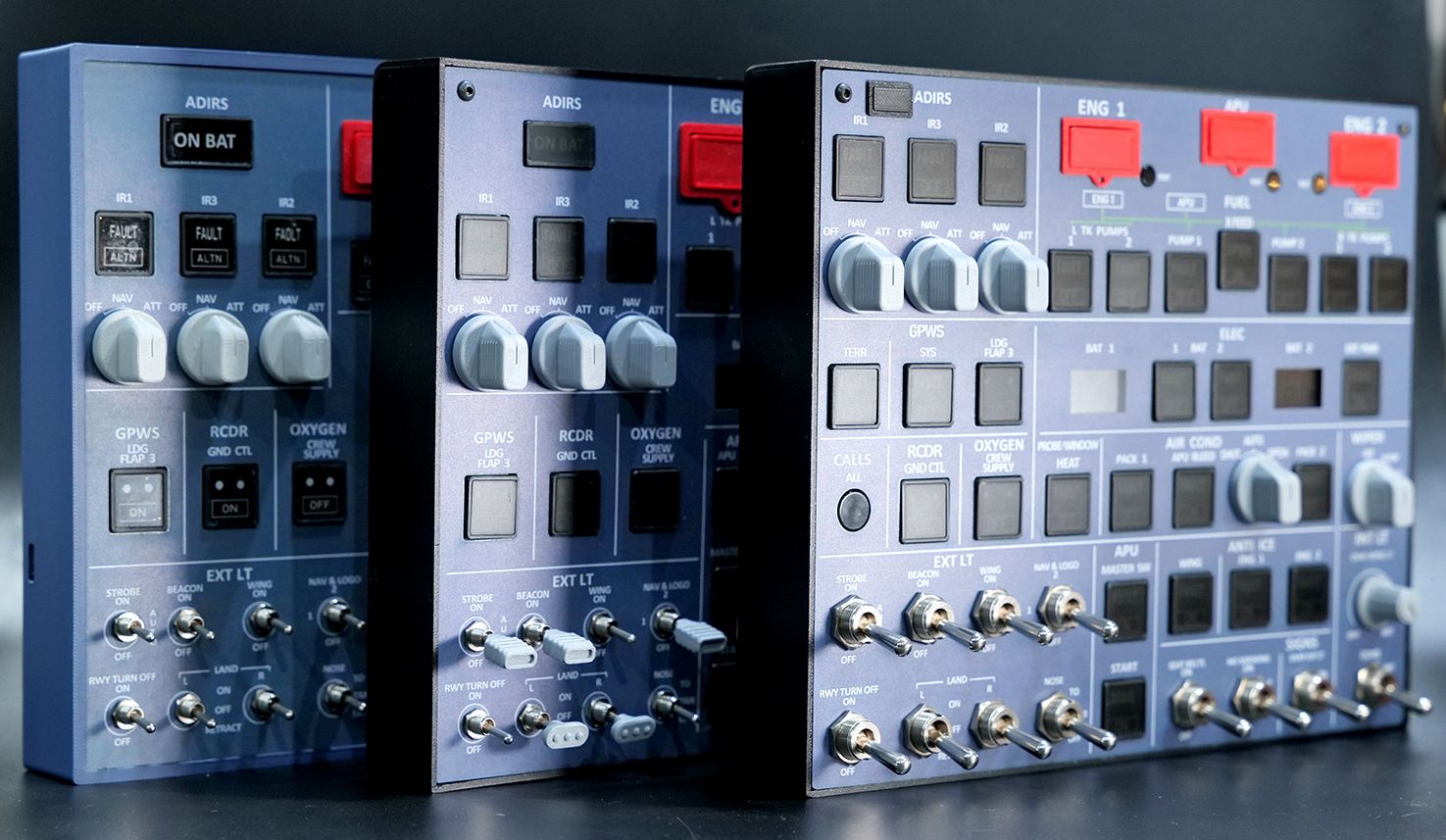
Every press delivers a crisp, definitive response that closely mimics the tactile feedback you’d expect from real aircraft controls. The toggle switches have also received attention, with larger sizes and wider spacing that better replicate the layout of an actual A320 cockpit. These aren’t just cosmetic changes – the improved spacing makes it easier to operate switches accurately, especially during complex procedures.
The Key Improvements in Version 3
When looking at overhead panels, we need to address the realism factor that sets the A107 V3 apart from many competitors. For example, the OVHD INTEG LT knobs now feature what Rowsfire calls “breathing” linear dimming, which synchronizes perfectly with in-game lighting systems. This creates a much more immersive experience, particularly during dawn and dusk flights where cockpit lighting transitions are most noticeable. The functional layout has been refined based on the actual A320 MAX configuration, with specific attention paid to details like the TCAS knob reassignment to air conditioning controls. These changes ensure that simulated operations align with real flight manual procedures, which are crucial for pilots using the simulator for training purposes or virtual pilots who want maximum authenticity.
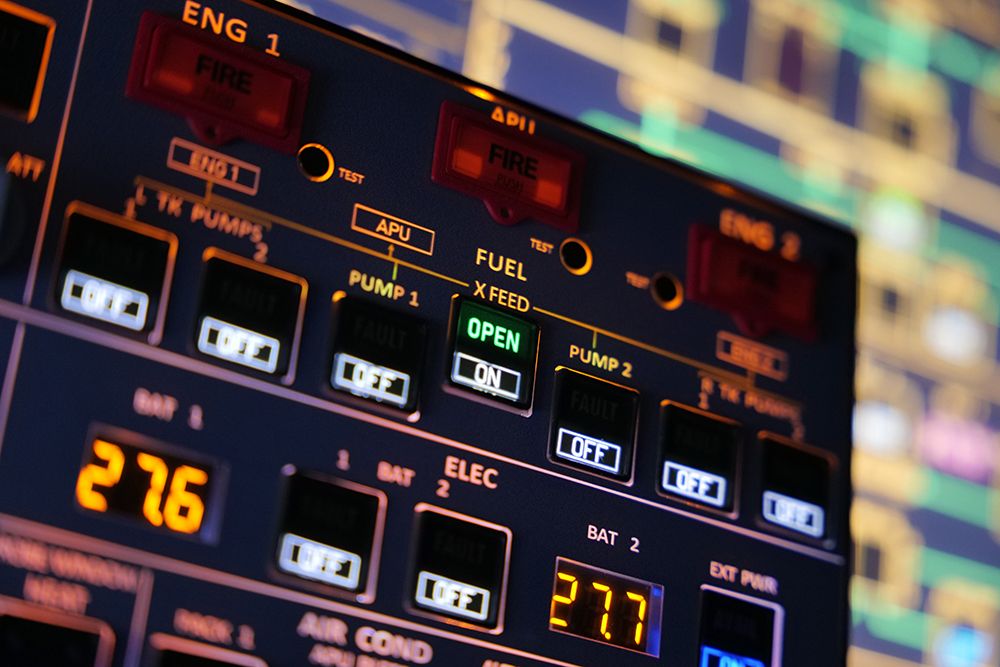
One more aspect that impressed us was the attention to lighting consistency: The panel integrates seamlessly with popular simulation platforms, and the lighting behavior matches what you’d expect from the real aircraft. The dimming is smooth and proportional, without the stepped or flickering behavior that can break immersion in lesser panels.
Integration and Setup Experience for Your Home Cockpit
For home cockpit building enthusiasts, the setup process can often be a significant hurdle. The A107 V3 addresses this with genuine plug-and-play functionality. The hidden USB port, now relocated to the back of the panel, creates a much cleaner installation with professional-looking cable management. MobiFlight compatibility comes with ready-to-use configuration files, which means you can have the panel operational within minutes rather than hours. We tested this with both X-Plane 12 and Microsoft Flight Simulator, and in both cases, the initial setup was straightforward enough for users with basic technical knowledge.
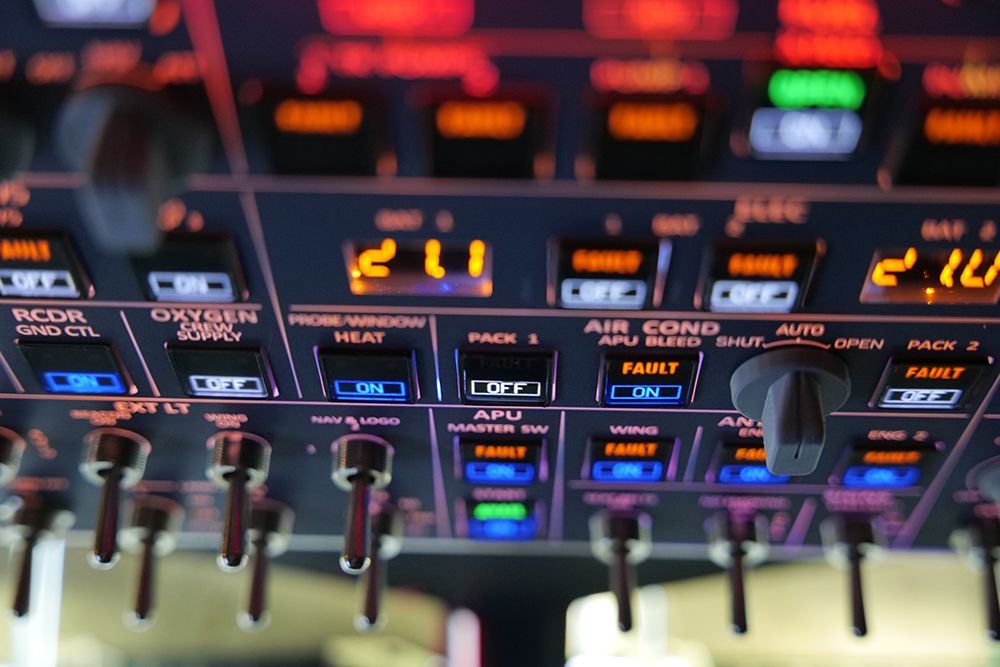
The panel dimensions and mounting points are well-designed for integration into existing cockpit frames. The weight distribution feels balanced, and the mounting hardware provided is adequate for secure installation.
Community Evolution and Brand Response
Rowsfire openly acknowledges that early versions of the A107 received criticism, and rather than dismissing these concerns, they used them as a roadmap for improvement. The evolution from V1 to V3 represents a case study in community-driven product development. User testimonials suggest that Rowsfire actively participates in Facebook groups and Discord communities, gathering feedback and implementing changes based on real-world usage patterns. This approach has transformed the brand’s reputation from one that received mixed reviews to one that’s now earning praise from the flight sim community.
The global after-sales support structure is another differentiator. Rather than requiring users to ship products back to China for repairs, Rowsfire has established local service centers and repair personnel, meaning most issues can be diagnosed remotely and resolved locally within five days. Rowsfire is actively expanding its product lineup to cater to a wider range of flight simulation needs. The technical support team can also provide one-on-one video assistance in the customer’s local language to help resolve any issues.
Upcoming new releases include the Rowsfire A105 All-in-One RMP + ATC Panel, designed to combine key radio management and air traffic control functions into a single compact unit. Additionally, the Rowsfire A108 Four-in-One Flight Display Panel will integrate PFD (Primary Flight Display), ND (Navigation Display), ECAM (Electronic Centralized Aircraft Monitor), and EWD (Engine Warning Display) functionalities, compatible across A320, A350, and A380 aircraft. Another exciting forthcoming product is the Rowsfire A103 Integrated Landing Gear Indicator Panel, supporting multiple airframes such as the A320, A310, A350, and XECAM series. Another notewhorty product of Rowsfire is the Boeing Overhead Panel, which is about the same size as the A107. If would like to explore more of Rowsfire' latest releases you can do so on the ➡️ Rowsfire Resource Hub.
The Pros and Cons
The build quality improvements are substantial and address the primary concerns from earlier versions. The authentic tactile feedback and realistic lighting behavior create genuine immersion benefits. Setup and integration are user-friendly, and the community support ecosystem adds significant value beyond the hardware itself. However, the price point, while reasonable for the quality delivered, may still be a barrier for casual users. Some advanced users might prefer even more customization options for specific aircraft variants. The panel is specifically designed for A320 operations, so it won’t suit users focused on other aircraft types. The increased button actuation force, while more realistic, might feel heavy to users accustomed to lighter consumer-grade controls. The panel’s focus on A320 MAX specifications means it may not perfectly match older A320 variants in all details.
Our Verdict
The Rowsfire A320 MAX overhead panel A107 V3 represents a mature product that successfully addresses the shortcomings of earlier versions. For serious flight simulation enthusiasts and home cockpit builders, it offers a compelling balance of authenticity, build quality, and user-friendliness at a reasonable price point.
We’d recommend this panel for intermediate to advanced users who prioritize realism and long-term durability. The community support and responsive customer service make it particularly appealing for users who want ongoing support rather than just a one-time purchase. For casual users or those just starting in flight simulation, the investment might be better directed toward a complete starter setup first.
However, for anyone committed to A320 simulation and looking to upgrade their overhead panel, the A107 V3 deserves serious consideration. In a market where many manufacturers release products and move on, this level of ongoing development and community engagement is refreshing and suggests good long-term support for your investment. Get yours now on ➡️ Rowsfire's Official Website.
Rowsfire Black Friday Flight Simulation Hardware Event
Just in time, Rowsfire has kicked off its Black Friday Flight Simulation Hardware Event, running from November 10 to December 2, offering some of the biggest deals of the year. Customers can enjoy a storewide 15% discount, or boost their savings to 17% when purchasing any two products. Legacy models A107 V2 and A106 V2 — optimized versions without the lighting-sync feature —are available at a 20% discount. Orders over $199 come with free gifts, with higher order values earning more exclusive rewards. Shoppers spending $1000 or more under a single IP will be upgraded to Rowsfire Lifetime Membership, unlocking privileges like a custom badge, exclusive discounts, priority access and shipping, lifetime 1-on-1 support, and even a birthday gift package. Throughout the event, Rowsfire will also host weekly lucky draws, giveaway campaigns, flight-sim competitions, and 24-hour flash sales, ensuring plenty of chances to win and save.
🚩 Sponsored Ad: This article is part of a paid collaboration with Rowsfire and may reflect their promotional messaging. Sponsored articles help us support the continued operation and development of Flightsim.to.