

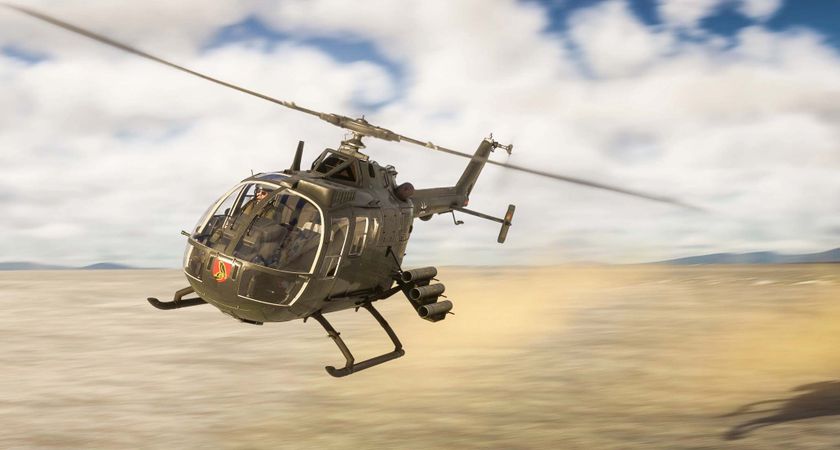
Few helicopters have left as lasting a mark on aviation history as the ➡️ MBB Bo 105. Developed in West Germany in the 1960s by Messerschmitt-Bölkow-Blohm, it became the world's first twin-engine light helicopter when it took to the skies in 1967 — a milestone that redefined what a light rotorcraft could do. With continuous production running until 2001, the Bo 105 spent three decades in service across military, medical, police, and aerobatic roles worldwide, earning a reputation that few helicopters in its class can match.
Now, Stratoware and award-winning studio Miltech Simulations have brought this iconic airframe to Microsoft Flight Simulator 2024, following over two years of collaborative development. The result is a detailed, multi-variant simulation of the Bo 105 aimed squarely at both helicopter enthusiasts and general-purpose simmers looking to expand their rotorcraft library.
What made the real aircraft special
The Bo 105's engineering legacy rests largely on its rigid, hingeless rotor system — a genuinely ground-breaking innovation at the time of its introduction. Rather than using the hinged rotor heads common on most helicopters of the era, the four-blade rotor is mounted directly onto a single milled titanium block, eliminating the need for mechanical hinges and significantly improving control responsiveness. This gave the Bo 105 an agility that was essentially unmatched in the light helicopter category, allowing it to execute aerobatic loops and rolls - manoeuvres that remain extraordinarily rare in civilian rotorcraft even today.

Power comes from two Allison/Rolls-Royce 250-C20B turboshaft engines, each producing 420 horsepower, giving the aircraft strong climb performance and reliable operation in high-altitude and high-temperature conditions. Designed to carry one or two pilots alongside up to four passengers, the Bo 105 found roles across an unusually broad spectrum: mountain rescue, anti-tank military operations, traffic and news broadcasting, oil platform support, and airshow aerobatics.
The add-on in detail
Stratoware has been explicit about the depth of effort behind this release. Flight dynamics were developed with direct input from a real-world Bo 105 pilot and subsequently validated by experienced flight simmers. The audio package, crafted by sound specialists Echo 19, is sourced from recordings of a real Bo 105 (registration N8809W), which should translate into an authentic cockpit soundscape.
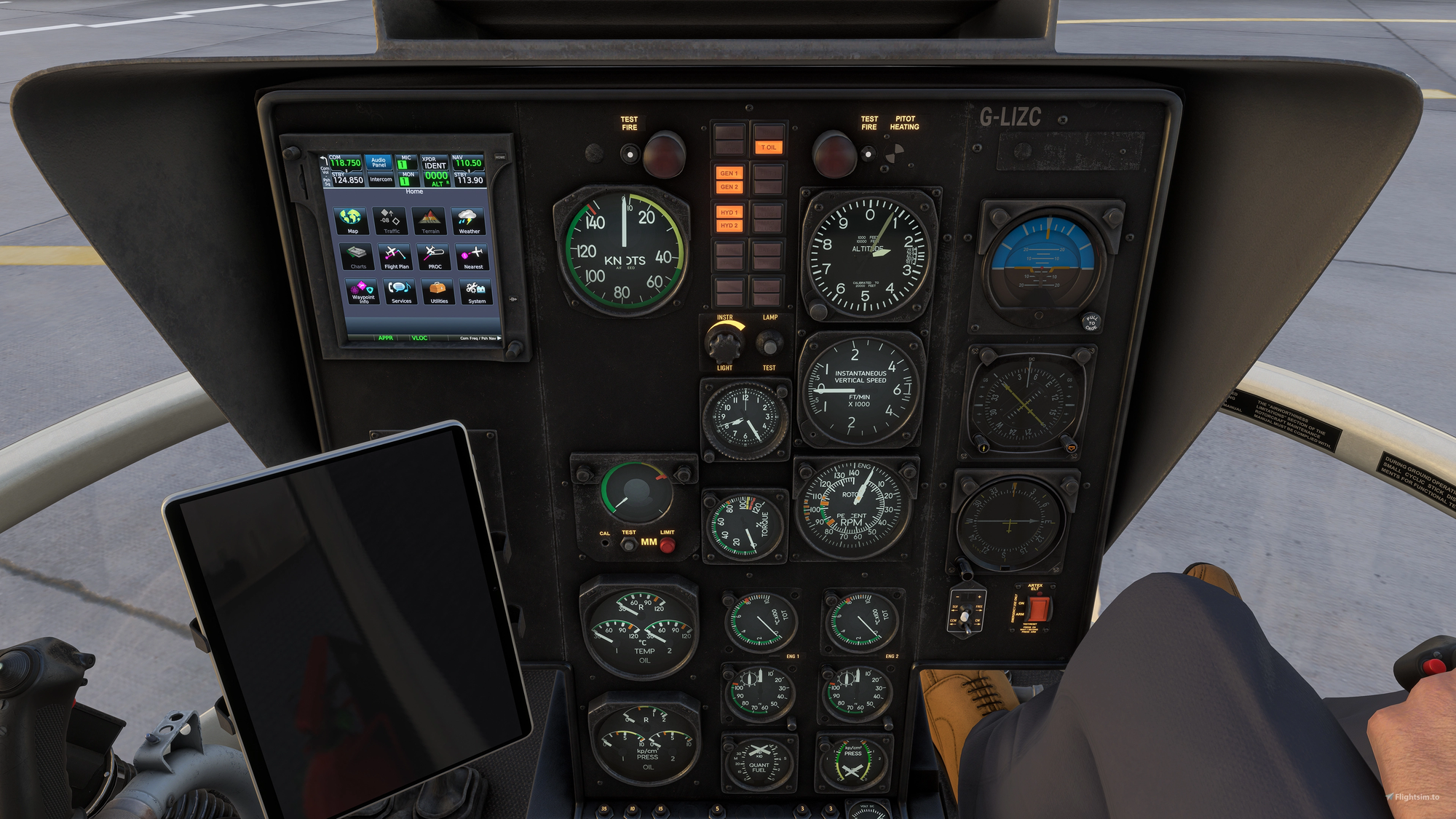
Avionics are handled by a GTN750 unit developed by PMS50. The cockpit features realistic systems depth with unique gauges and radio panels drawn from real-world manuals and references, while the exterior modelling is described as ultra-detailed with high-resolution textures suited for close-up inspection. The add-on also includes Teufelsgraben scenery in Germany — a location closely associated with Bo 105 operations — developed by Birdstrike Sim.
Thirteen distinct configurations are included, spanning the full operational range the Bo 105 occupied in real-world service. Several of these go beyond purely cosmetic distinctions. The Police variant includes a functional searchlight and FLIR camera, the Broadcast variant features a working camera controller and screen, and the Aerobatic configuration comes with a realistic smoke system for airshow display use. If you're looking to add one of rotorcraft aviation's most celebrated airframes to your hangar, this one is worth a close look: ➡️ Now available on the Flightsim.to Store.