

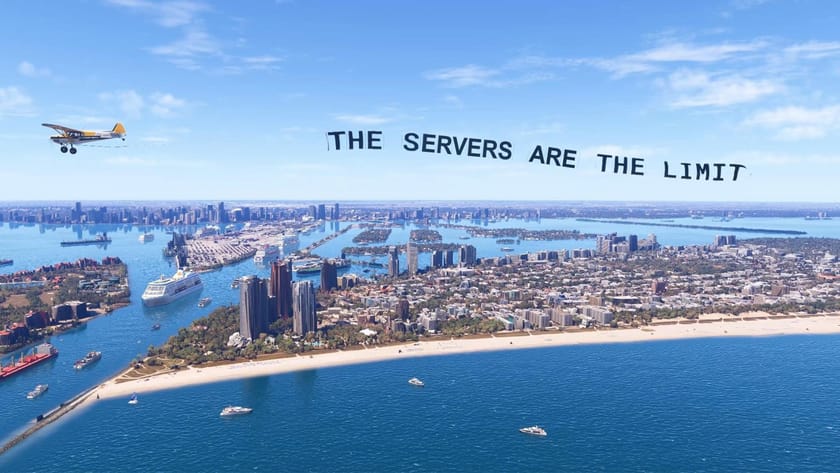
Finally here: Microsoft Flight Simulator 2024! — A sentiment that should evoke excitement among virtual aviators worldwide. Instead, the much-anticipated release has left thousands of players grounded, frustrated, and wondering why yet another AAA title has launched in an incomplete state. With nearly 3,000 reviews on Steam, over 85% of them harshly negative, Microsoft Flight Simulator is off to a rocky start. Common complaints include endless loading screens, missing content, server meltdowns, and bugs aplenty. The issue of broken game launches is hardly unique to Microsoft Flight Simulator 2024 though. It’s a troubling pattern in the gaming industry, where increasingly ambitious projects are released under immense time pressure, often prioritizing deadlines and profitability over quality and polish.
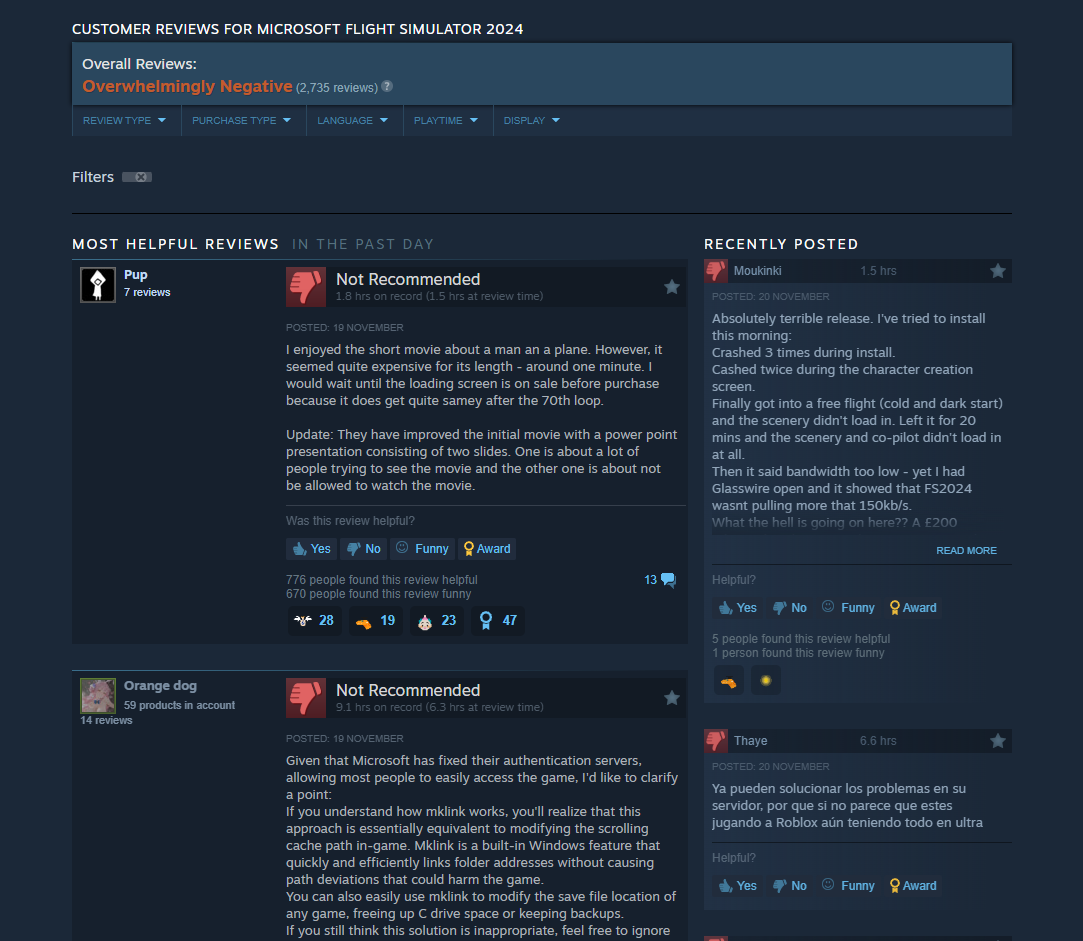
The Launch Day Turbulence
Microsoft and Asobo Studio’s attempt to bring us the "most ambitious simulator ever" quickly nosedived into chaos. From 8-hour-long loading times to game-breaking server crashes, only a fraction of players could even experience the game on launch day. Missing aircraft, unresponsive menus, and incompatibility with older add-ons compounded the frustration. The game’s own development team acknowledged issues ranging from a mouse cursor glitch that prevents signing in on Steam to content tied to premium editions not appearing until multiple restarts. This paints a picture of a game released undercooked and rushed out the door. The most egregious oversight? A lack of robust server infrastructure, which the team themselves admitted was ill-equipped to handle launch-day traffic. Despite testing for up to 200,000 concurrent users during alpha phases, the reality of a full-scale launch overwhelmed their systems.
An Industry Problem
Microsoft Flight Simulator 2024 is merely the latest in a long line of high-profile games that stumbled at the starting gate. The cycle has become painfully familiar: massive pre-release hype, an unfinished product, and a post-launch apology tour filled with vague promises to “do better”. Developers often cite the sheer complexity of modern games as a reason for these failures. While that is undoubtedly true, it also raises the question: Why not delay launches until products are genuinely ready? The answer likely lies in the economics of gaming. Deadlines tied to fiscal quarters, marketing schedules, and shareholder expectations frequently override quality concerns. It’s no coincidence that Microsoft Flight Simulator 2024, a marquee release for Microsoft, arrived just ahead of the holiday shopping season. Yet, when the pursuit of profit compromises the player experience, it risks eroding trust in even the most beloved franchises.
The Fallout
The fallout from Microsoft Flight Simulator's botched launch is significant. Negative reviews on Steam are a testament to player dissatisfaction, with many calling for refunds. Social media platforms and Discord channels have become echo chambers of complaints. Meanwhile, the game's developers, in a YouTube video addressing the problems, acknowledged the missteps but offered limited solutions.
Jörg Neumann, Head of Microsoft Flight Simulator, and Asobo CEO Sebastian Wloch explained that new systems like the Career Mode and updated missions overloaded a server-side cache system, which buckled under player demand.
If Not Microsoft, Then Who?
While transparency is commendable, it’s difficult to see this as anything other than poor planning. If Microsoft — a tech giant with unparalleled resources, extensive experience, and a dedicated studio like Asobo at the helm — cannot execute a smooth release for a flagship title, then who can? Smaller studios with tighter budgets and fewer resources certainly face even greater challenges. Yet the question arises: Should players continue to excuse these missteps when solutions are well within reach?

For instance, staggered release schedules based on regions could have mitigated server strain. Pre-loading core files, paired with server-based activation on launch day, could have significantly reduced bottlenecks. Microsoft could also have invested more heavily in temporary server capacity to handle the expected surge. Mistakes can happen; developers are human, and unforeseen issues are a reality in complex projects. However, when even 8 hours after launch — or, in some cases, an entire day — basic functionality remains elusive, it reflects a higher-level failure. This is especially glaring given Microsoft and Asobo’s prior experience with the tumultuous launch of the 2020 version, where many of the same issues plagued players.
This isn’t an isolated incident. Titles like Cyberpunk 2077, Battlefield 2042, and Diablo III are infamous examples of disastrous launches. In Cyberpunk 2077, CD Projekt Red promised a polished experience but released a buggy and, in some cases, unplayable game. Battlefield 2042 was riddled with broken features and performance issues, eroding trust in a franchise once known for its excellence. Even Blizzard, a veteran studio, faced a firestorm during Diablo III’s launch, where server errors ("Error 37") became the meme of the day. These cases highlight a systemic problem: the prioritization of hitting release dates over delivering functional, quality products.

The gaming industry must shift its approach. Games should not be judged solely on their launch day, but companies must recognize that first impressions matter. A robust pre-launch testing infrastructure, phased rollouts, and learning from past mistakes could prevent the cycle of broken promises. Players don’t expect perfection, but they deserve products that, at the very least, work on day one. Unfortunately, Microsoft and Asobo missed that mark.
Can This Be Fixed?
The good news is that the issues, though significant, are fixable. Microsoft has promised swift updates to address server reliability, backward compatibility, and bug fixes. They’ve also reiterated their commitment to listening to player feedback. But the damage to the game’s reputation is already done. The question is whether players will stick around long enough for the simulator to live up to its potential.
Don't Panic: The Bigger Picture
What Microsoft Flight Simulator’s launch reveals is an industry in crisis. Gamers are tired of paying full price for what often feels like early-access experiences. Developers and publishers must recognize that short-term savings and rushed launches only lead to long-term reputational damage. For now, the skies remain turbulent. Let’s hope the team at Microsoft and Asobo can steady the plane and deliver the experience they promised.

While the frustration surrounding the launch of Microsoft Flight Simulator 2024 is valid, it’s important to remember that this is not the end of the world for the simulator or its community. Before rushing to demand refunds, players should consider that server issues and bottlenecks are often temporary and likely to stabilize once the initial surge has passed. Microsoft and Asobo have shown with MSFS2020 that they are committed to improving their product post-launch, consistently adding new features, fixing bugs, and expanding the simulator's capabilities. If they continue this level of dedication with MSFS2024, players will not only have a polished experience in the near future but also a simulator that they can enjoy and grow with for years to come. Yes, the failed launch day is disappointing, but the value of what the simulator offers — with its global scenery, detailed aircraft, and an ever-evolving platform — is undeniably strong. For those who can weather this storm, the value for money of Microsoft Flight Simulator 2024 will likely prove to be worth the wait.
For players encountering issues with Microsoft Flight Simulator 2024, several official resources are available to help navigate problems and stay updated on fixes. The Top Known Issues page provides a comprehensive list of currently identified bugs and workarounds. For the latest updates and announcements, including ongoing fixes, check the Launch Day Update. Additionally, the official forums are a great place to connect with the community, report bugs, and share experiences.
This article contains subjective opinions and interpretations of the author. While every effort has been made to provide accurate information and context, the piece reflects personal perspectives and critical analysis of the events and topics discussed. Readers are encouraged to form their own opinions and consider additional sources for a comprehensive understanding.